Notables Interred at USAFA


Hubert R. Harmon


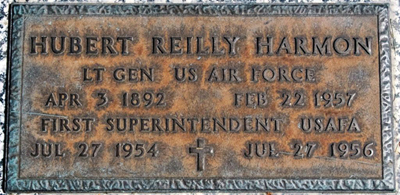
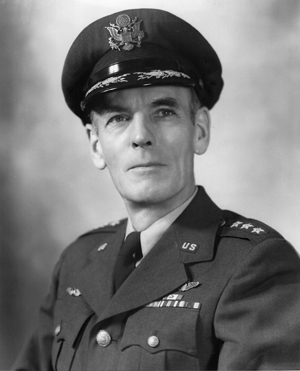
Lieutenant General Hubert Reilly Harmon, after a distinguished combat career in World War II, was instrumental in developing plans for the establishment of the United States Air Force Academy. He was the first superintendent of the academy and was one of the persons most influential in establishing it as a successful educational institution. He was the first person to be interred at the Air Force Academy cemetery.


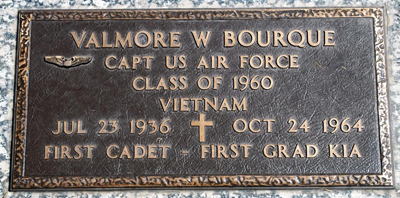
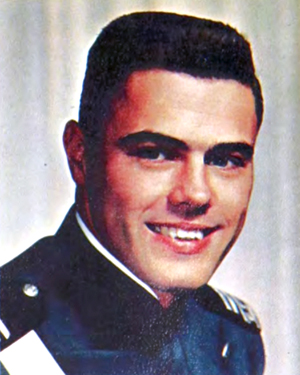
Valmour W. Bourque


Val Bourque was the first cadet sworn in with USAFA’s first class early on the morning of 11 July 1955. Due to some early academic challenges, he graduated with the Class of 1960. In 1963 he volunteered to go to Viet Nam and was assigned enroute to the 309th Airlift Squadron at Pope AFB, North Carolina in the C-123. On 24 October 1964, his C-123 was shot down by the Viet Cong. There were no survivors. On 5 November 1964 he was laid to rest, the eighth graduate to be interred at the Academy, and the first who was killed in action.


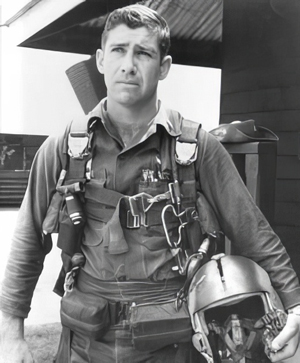
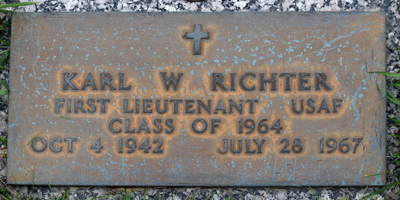
Karl W. Richter


Karl Wendell Richter, a 1964 graduate of the Air Force Academy, was an accomplished fighter pilot during the Vietnam War. At the age of 23 he was the youngest pilot in that conflict to shoot down a MiG in air-to-air combat and was personally awarded the Vietnamese Distinguished Service Medal by Premier Nguyễn Cao Kỳ. As he approached the 100-mission mark, Richter asked permission to fly a second 100 missions. On July 28, 1967 he was hit by enemy AAA, forcing him to eject. HH-3E Jolly Green Giants arrived on scene and effected a successful pick up. However Richter's parachute was blown onto a rocky outcrop, severely injuring him, and he succumbed to his injuries while being transported to the hospital. At the time of his death, Richter had flown more missions over North Vietnam than any other airman—198 in all officially credited.


Carl A. Spaatz


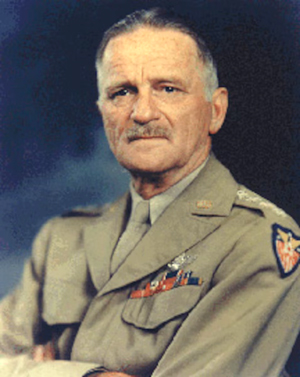
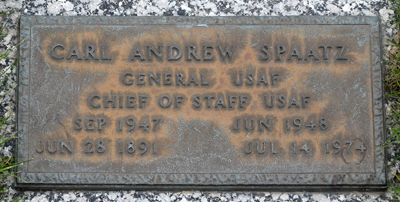
Carl Andrew Spaatz, nicknamed "Tooey", was an American World War II general. In July 1945 he assumed command of the U.S. Strategic Air Forces in the Pacific on Guam. From this command, Spaatz directed the strategic bombing of Japan, including the atomic bombings of Hiroshima and Nagasaki. Spaatz was present at Reims when the Germans surrendered to the Americans on 7 May 1945; at Berlin when they surrendered to the Soviets on 8 May; and aboard the battleship Missouri in Tokyo Bay when the Japanese surrendered on 2 September. He was the only man of general rank or equivalent present at all three of these acts of surrender. Spaatz succeeded General Hap Arnold as Commanding General of the Army Air Forces in February 1946. After the creation of the independent Air Force by the National Security Act of 1947 Spaatz was appointed as the first Chief of Staff of the new United States Air Force in September 1947. Spaatz retired from the military at the rank of general on 30 June 1948,


Ruth Gail McComas


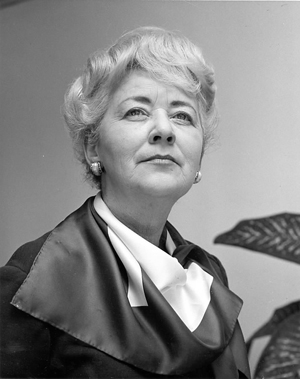
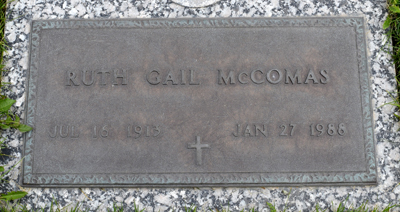
Ruth Gail McComas was married to Col. Edward O. McComas. In 1955, one year after her husband’s death, "Mrs. Mac" was appointed the first hostess of the newly constructed Air Force Academy and served for 22 years before her retirement in 1977.


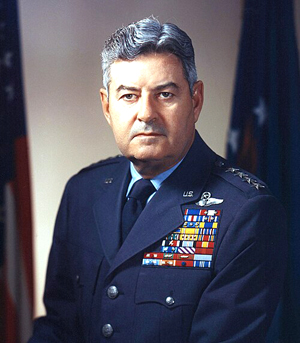
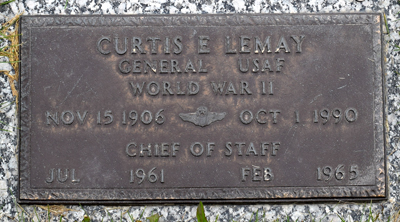
Curtis E. LeMay


Curtis Emerson LeMay was a US Air Force general who was a key American military commander during World War II. After service in Europe, he was transferred to the China Burma India Theater and placed in command of strategic bombing operations against Japan. After the war, he was assigned to command USAF Europe and coordinated the Berlin Airlift. He served as commander of the Strategic Air Command (SAC) from 1948 to 1957. As Chief of Staff of the Air Force, from 1961-1964, he called for the bombing of Cuban missile sites during the Cuban Missile Crisis and sought a sustained bombing campaign against North Vietnam during the Vietnam War. General Lemay retired from the Air Force on 1 February 1965.


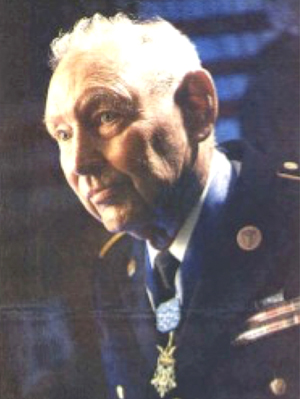
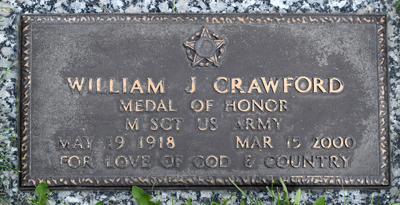
William J. Crawford          The Medal of Honor


William Crawford was awarded the Medal of Honor for action during World War II. After destroying two machine gun nests, he was taken prisoner by the Germans. He was reported missing in action and presumed dead by the U.S. Army. Billʼs father accepted the Medal of Honor for his son from President Franklin Roosevelt in 1943. Forty-one years later, President Ronald Reagan presented the Medal of Honor to a very much alive Master Sergeant Bill Crawford at the US Air Force Academy on May 31, 1984. MSgt Crawford served as a janitor in Vandenberg Hall in the 1970s and was well known by many members of the Class of 1975. Read Al Krukowski’s remembrance of him HERE.


Robin Olds


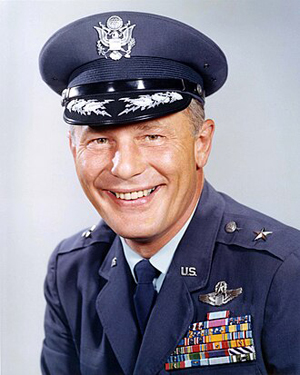
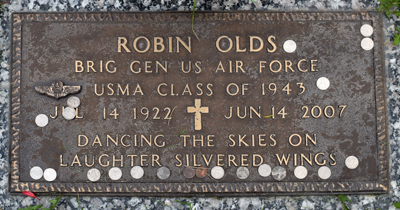
Robin Olds was an American fighter pilot and general officer in the United States Air Force. Rising to the command of two fighter wings, Olds is regarded among aviation historians, and his peers, as the best wing commander of the Vietnam War, for both his air-fighting skills, and his reputation as a combat leader. He was a "triple ace", with a combined total of 16 victories in World War II and the Vietnam War. He served as the sixth Commandant of Cadets at the Air Force Academy from 1967 to 1971 and retired in 1973 as a brigadier general, after 30 years of service.


Albert P. Clark


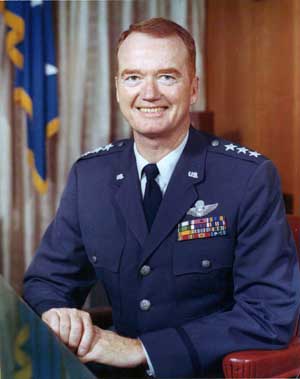
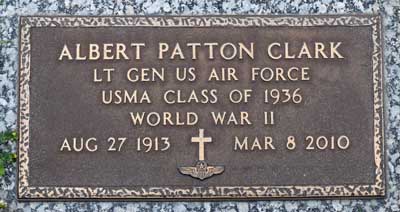
Albert P. Clark had a long and distinguished Air Force career, culminating in his service as the sixth Superintendent of the Air Force Academy. He was the first American fighter pilot to be shot down during World War II and spent the remainder of the war as a prisoner in Stalag Luft II, which was the site of “The Great Escape.” He retired from the Air Force as a lieutenant general in 1974.


William T. Woodyard


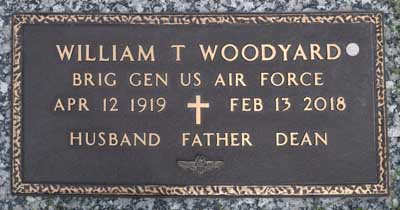
William T. Woodyard began his career as an Aviation Cadet in 1940, eventually rising to Commander of the 448th Bombardment Group in August 1945 at McCook Army Air Field, NE. From 1951 to 1954 he was a Chemistry Instructor at the US Military Academy, West Point, NY, progressing to Associate Professor. In 1954 he became an Associate Professor of Chemistry as an original member of the Air Force Academy faculty at its interim site at Lowry AFB in Denver, eventually being named Dean of the Faculty and promoted to the grade of brigadier general in 1968. During his tenure as Dean, he implemented updated graduation, core, and major course requirements as well as adding a flight requirement for all cadets. He instituted the Honor Graduate Program, the Cadet Exchange Program with the French l’École de l’Air, and the Distinguished Visiting Professor Program. He served in that position until his retirement in 1978.